April 21, 2026
This blog will give an overview of vacuum pumps, their origin, and the different varieties of them.
1. What is a Vacuum Pump and How Does it Work?
1.1 Definition and Purpose
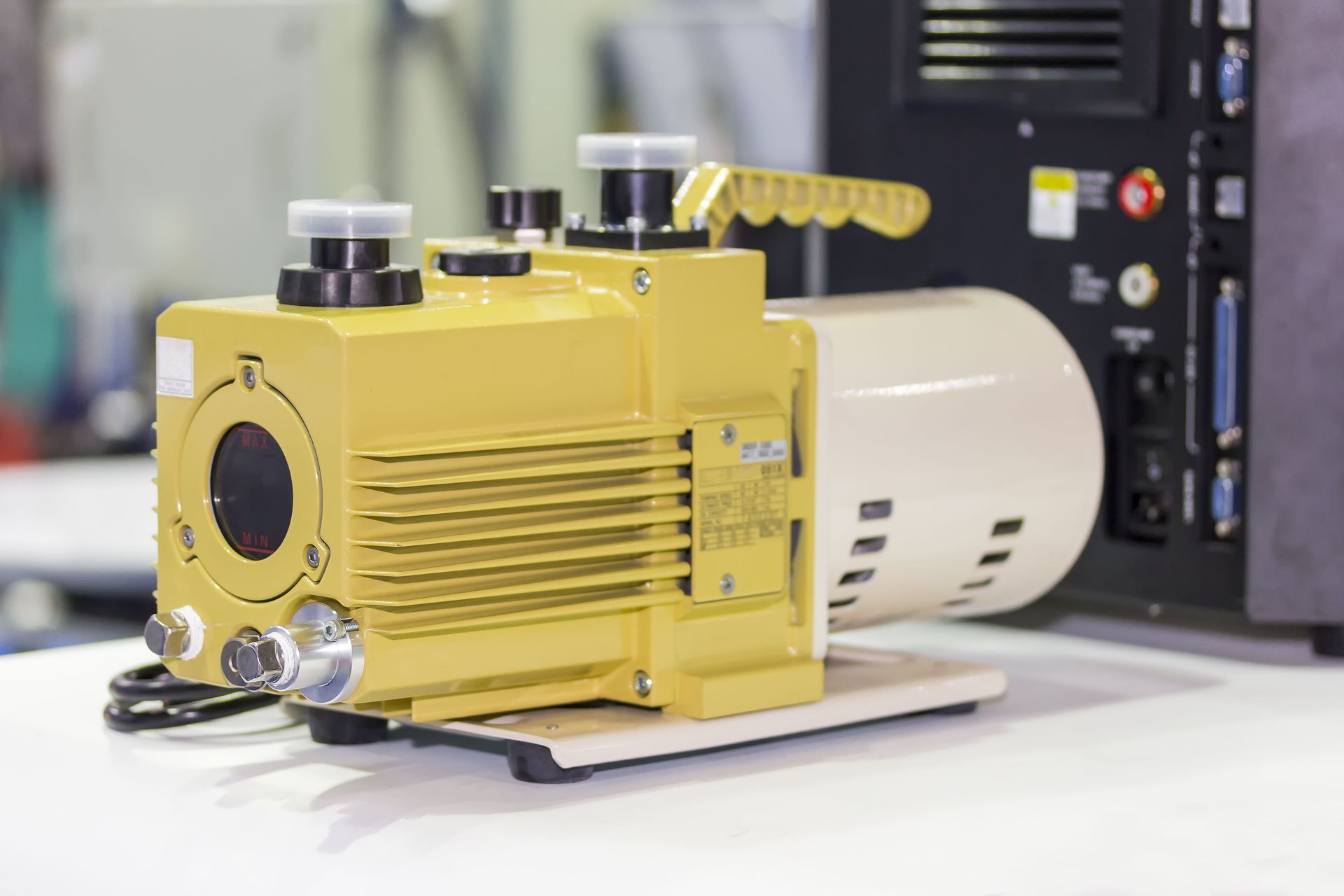
Vacuum pumps are indispensable tools in various industrial and scientific applications, designed to remove gas molecules from a sealed volume to create a partial vacuum. These devices serve as the backbone in fields such as physics, chemistry, and engineering, where controlled environments are crucial. The primary purpose of a vacuum pump is to reduce air pressure below atmospheric pressure, facilitating processes like degassing, drying, and maintaining a controlled environment. As essential components, vacuum pumps help maintain cleanrooms, support semiconductor manufacturing, and assist in analytical procedures.
The definition of a vacuum pump has evolved significantly over the centuries, reflecting technological progress and adaptation to new industrial demands. Initially simple mechanical devices, vacuum pumps have transformed into sophisticated machines that cater to advanced requirements. In essence, a vacuum pump can be described as a device generating a vacuum environment by removing air and other gaseous substances from a given space. This critical function enables a myriad of applications, ranging from food packaging to creating powerful lasers in scientific research.
Understanding vacuum pumps requires a grasp of both physical principles and practical applications, as these machines are integral to modern innovation. Over time, vacuum pump technology has progressed from basic manual concepts to automated systems that offer enhanced efficiency and precision. This evolution underscores the importance of vacuum pumps across various sectors ranging from healthcare to aerospace technology. By enabling the creation of vacuum environments, these pumps have revolutionized countless scientific and industrial processes.
1.2 Basic Principles of Operation
The operation of vacuum pumps is based on fundamental principles involving pressure differentials and the mechanical manipulation of gases. At its core, a vacuum pump works by creating a pressure difference that allows it to transport air or gas from a chamber to the external environment. This movement of gases is traditionally achieved through mechanical or suction means, depending on the design of the pump. The design intricacies of vacuum pumps are what optimize them for specific tasks, such as chemical processing or pharmaceutical manufacturing.
In scientific terms, a vacuum pump relies heavily on Boyle's Law, which relates pressure and volume of gases, and the general principles of fluid dynamics. By reducing the number of air molecules in a space, vacuum pumps effectively decrease pressure, allowing for various applications to be conducted under controlled vacuum conditions. Advanced models integrate technology to regulate and monitor pressure, ensuring the maintenance of desired conditions for sensitive operations. Consequently, these principles of operation allow the efficient utilization of vacuum pumps in precision-demanding environments.
The efficiency and functionality of vacuum pumps are closely tied to their structural design and the principles governing their operation, which have been refined over centuries. Advances have enabled the creation of hybrid models that combine mechanical elements with electronic controls, further enhancing operational capabilities. Today's vacuum pumps can manage larger volumes, sustain more precise pressure levels, and offer increased longevity in demanding settings. As our understanding of vacuum science deepens, these principles continue to evolve, promising further innovations in pump technology.
2. Who Invented the Vacuum Pump?
2.1 Early Developments in Vacuum Technology
The inception of vacuum pump technology can be traced back to the early scientific inquiries of the 15th century, marking the beginning of a transformative era. According to Technology.org, vacuum pumps have been around since that time when early scientists started exploring the nature of air pressure. The journey began with rudimentary devices attempting to manipulate air, fostering an understanding that propelled the evolution of modern pumps. These early explorations proved crucial in establishing the foundational principles on which further innovations were built, underscoring the historical significance of this technological evolution.
From ancient pneumatic experiments to medieval bellows, inventors and scientists sought to decode the enigmas of air pressure and vacuum. The Renaissance period saw innovations spurred by intellectual curiosity and rudimentary experimentation, albeit hindered by the limitations of available technology. Yet, these efforts laid critical groundwork for the eventual breakthroughs that would redefine the trajectory of vacuum pump technology. As tools and methodologies developed, so too did the capacity to create more effective pumps, setting the stage for later successes in manipulating air pressure.
As explorers sought new knowledge in the science of vacuums, early technology saw significant enhancements in both scope and sophistication. Collaboration between inventors, theorists, and practitioners fostered advancements that brought scientific concepts to practical fruition. These remarkable undertakings elucidated key principles, offering essential building blocks from which revolutionary innovations were derived. Together, these initial efforts highlighted humanity's relentless pursuit of understanding, ultimately catalyzing the profound advancements in vacuum technology that followed.
2.2 The Innovators: Otto von Guericke and Beyond
One of the pivotal figures in the history of vacuum pump development was Otto von Guericke, whose contributions transcended mere innovation; they symbolized a scientific paradigm shift. In the 17th century, von Guericke's ingenuity led to the invention of the first effective vacuum pump utilizing the principle of mechanically increasing air pressure. This not only challenged prevailing notions about vacuums but also provided crucial insights into the nature of atmospheric pressure. His experiments demonstrated the power of vacuum pumps, illustrating their potential to influence various scientific and industrial domains.
Von Guericke's work left an indelible mark, inspiring subsequent generations of scientists and inventors to pursue advancements in the realm of vacuum technology with renewed vigor. As the implications of his findings were further explored, researchers expanded the applications of vacuum pumps, building upon Guericke's foundational work. This laid the groundwork for pioneers like Robert Boyle, who further refined the concepts of air pressure and vacuum stability. Innovators following in von Guericke's footsteps consistently pushed the boundaries, spurring pivotal advancements that transformed theoretical understanding into practice.
3. What are the Different Types of Vacuum Pumps and Their Uses?
3.1 Positive Displacement Vacuum Pumps
Positive displacement vacuum pumps operate on the fundamental principle of mechanically reducing the volume of a chamber to compress and vent gases. This category includes several subtypes, namely roots, claw, and rotary vane pumps, each designed for distinct applications and efficiency levels. Typically employed in industrial settings, such as manufacturing, metallurgy, and biopharmaceutical processes, these pumps excel at creating moderate vacuums and are renowned for their reliable performance in harsh environments. Their mechanical simplicity and cost-effectiveness make them widely appreciated across varying industries.
Rotary vane pumps are highly favored due to their robust design, which provides consistent and dependable operation. These pumps utilize rotating blades that trap and compress gas molecules within vacuum chambers, effectively removing them to create a vacuum. Offered in oil-sealed and dry models, rotary vane pumps cater to a wide range of applications, from chemical processing to HVAC systems. Their adaptability and practical utility assure their status as enduring favorites in the realm of vacuum technology.
3.2 Momentum Transfer Vacuum Pumps
Momentum transfer vacuum pumps, also known as kinetic pumps, employ high-speed movement to propel gas particles and establish a vacuum, marking a departure from the principles inherent in positive displacement pumps. This category of pumps includes diffusion and turbo molecular pumps, each uniquely engineered to accommodate low-pressure and high-vacuum applications. Through innovative implementation of action-reaction principles, these pumps achieve rapid removal of gas molecules, making them invaluable in environments demanding minimal contamination and vacuum purity.
Turbo molecular pumps utilize precision-engineered rotor systems to achieve extremely low pressures, performing optimally in sophisticated fields like semiconductor manufacturing, surface chemistry, and high-energy physics research. These pumps’ non-contacting rotors ensure durability and maintain high performance by relying on magnetic or mechanical bearings that minimize wear. The unrivaled vacuum levels achieved by turbo molecular pumps elevate their operational capabilities, enabling high-precision activities in state-of-the-art laboratories and production facilities.
The evolution of vacuum pumps is emblematic of technological progression spanning centuries, illustrating their enduring significance in scientific and industrial arenas. From rudimentary origins to sophisticated systems, vacuum pumps have evolved to accommodate diverse processes and requirements across myriad applications. This progression echoes humanity's ceaseless quest for understanding and mastery of the physical world, influencing industries as varied as healthcare, aerospace, and environmental science. Reach out to Vacuum Pumps Rebuilders today to see how we can help you!